Why FlowInquiry Believes Ticket Management Shouldn’t Feel Like Heavyweight Project Management
Why FlowInquiry Believes Ticket Management Shouldn’t Feel Like Heavyweight Project Management
When small teams and nonprofits adopt enterprise tools like Jira or Zendesk, they often realize the trade-off: power comes at the cost of complexity, high licensing fees, and wasted time. Teams spend more energy configuring workflows than actually solving customer problems.
FlowInquiry was created as a lightweight, open-source Jira alternative—so you can manage tickets and projects without feeling buried under an enterprise system.
The Pareto Principle: Doing More With Less
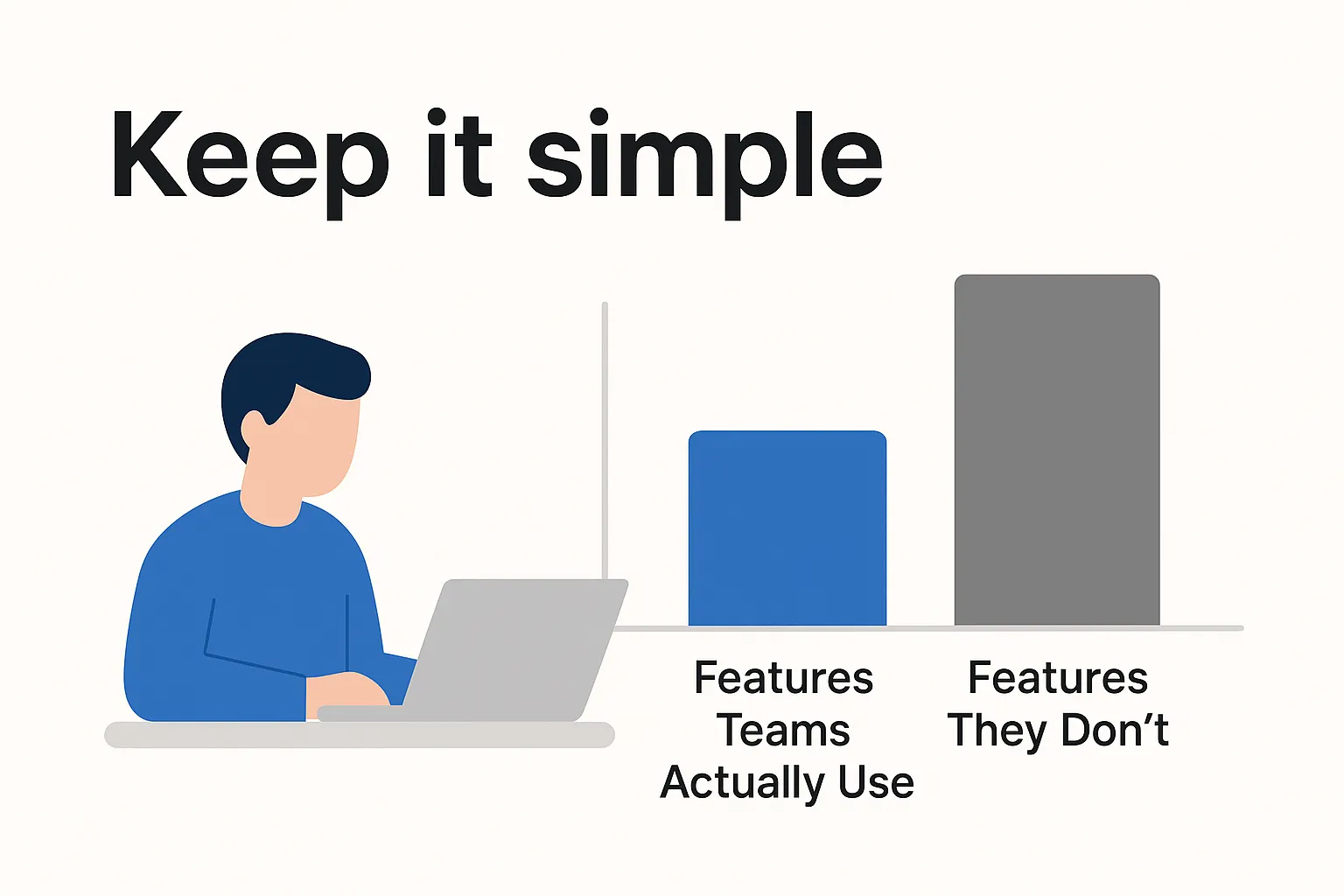
At FlowInquiry, we apply the Pareto principle (the 80/20 rule):
- 80% of teams need only about 20% of the features found in enterprise tools.
- The other 80% of features add complexity, slow adoption, and drive up costs—without helping most users.
That’s why FlowInquiry is designed to provide the features almost every team needs—ticketing, iterations, collaboration, and workflows—while leaving out unnecessary overhead.
The result? A simpler, faster, more approachable solution that still aligns with industry best practices in project management.
The Problem with Existing Tools
- Over-engineering for small teams: Tools like Jira are built for enterprises, not SMEs or nonprofits.
- High cost of ownership: Licensing fees and add-ons pile up quickly.
- Time sink: Instead of helping, the tool itself becomes another project to manage.
If you’ve ever wished for a self-hosted ticketing system that just works, FlowInquiry is for you.
The FlowInquiry Approach
FlowInquiry started with a different mindset: simplicity first, extensibility when needed.
- Open-source & self-hosted → No vendor lock-in, no hidden fees, and you control your data.
- Lightweight ticket management → Built around what almost all teams need, not every edge case.
- Industry best practices baked in → Proven workflows, secure access control, and transparent activity tracking.
Key Features That Make the Difference
- Iteration management without friction → Close an iteration and instantly notify your team via server-sent events (SSE).
- Entity-level access control → Fine-grained permissions for better security.
- Activity logs & watchers → Transparent history and real-time collaboration.
By focusing on the 20% of features that drive 80% of productivity, FlowInquiry helps teams stay aligned without distraction.
Start Small, Scale When You’re Ready
FlowInquiry is built for teams to grow at their own pace:
- Host it yourself → Runs on Postgres, Caddy, Docker, or Kubernetes.
- Stay flexible → Add premium modules later, like Slack or SMS notifications.
- Future-ready → Extend workflows without a painful migration.
Whether you’re a small dev shop, a nonprofit, or a growing business, FlowInquiry makes it easy to start small and scale into a full open-source project management tool.
Closing Thoughts
FlowInquiry is for teams who want to move fast, stay collaborative, and avoid the overhead of heavyweight project management tools.
By applying the Pareto principle, we ensure FlowInquiry covers the core workflows almost all teams need, while following industry best practices for reliability and collaboration.
👉 Check out FlowInquiry on GitHub
👉 Join the support community
Table of Contents
Related Articles

From Frustration to Innovation: How Poor Support Led to FlowInquiry
I invested in a premium electric charger known for its quality and long-term support. But when it stopped working within a year, the customer service experience was far from what I expected. Here's the story of how mismanaged ticket handling highlighted the need for better solutions like FlowInquiry

Why Open-Source Tools Are Vital for Small and Mid-Sized Businesses
Open-source tools give small and mid-sized businesses the freedom to grow without expensive IT overhead—empowering teams through transparency, flexibility, and collaboration.
FlowInquiry Open source business model
The open-source business model is at the heart of FlowInquiry’s mission. By leveraging the power of open source, we aim to give back to the community, improve our product through user collaboration, and empower teams everywhere